
Brake Hydraulic System Parts Guide
Keep Brake Pressure Strong With the Right OEM Parts
Your brake hydraulic system turns pedal pressure into stopping power. Brake fluid, brake lines, master cylinders, fittings, and trailer brake parts work together for a firm pedal and predictable braking. Plaza Parts helps budget-conscious DIYers shop OEM brake hydraulic parts online while saving compared to typical dealership counter pricing. A safe repair starts with the right diagnosis, fitment, and parts designed for your vehicle’s original braking system.
Weak Braking Often Starts With Lost Hydraulic Pressure
A brake system can feel worn out even when pads are not the issue. A soft pedal, sinking pedal, fluid leak, longer stopping distance, or poor trailer braking can point to hydraulic pressure loss.
This matters for daily drivers, older vehicles, trucks, vans, and tow vehicles. A corroded line, failing master cylinder, or worn trailer brake component may not fail at once. The pedal may slowly feel less firm, or stopping distance may increase.
How the Brake Hydraulic System Works
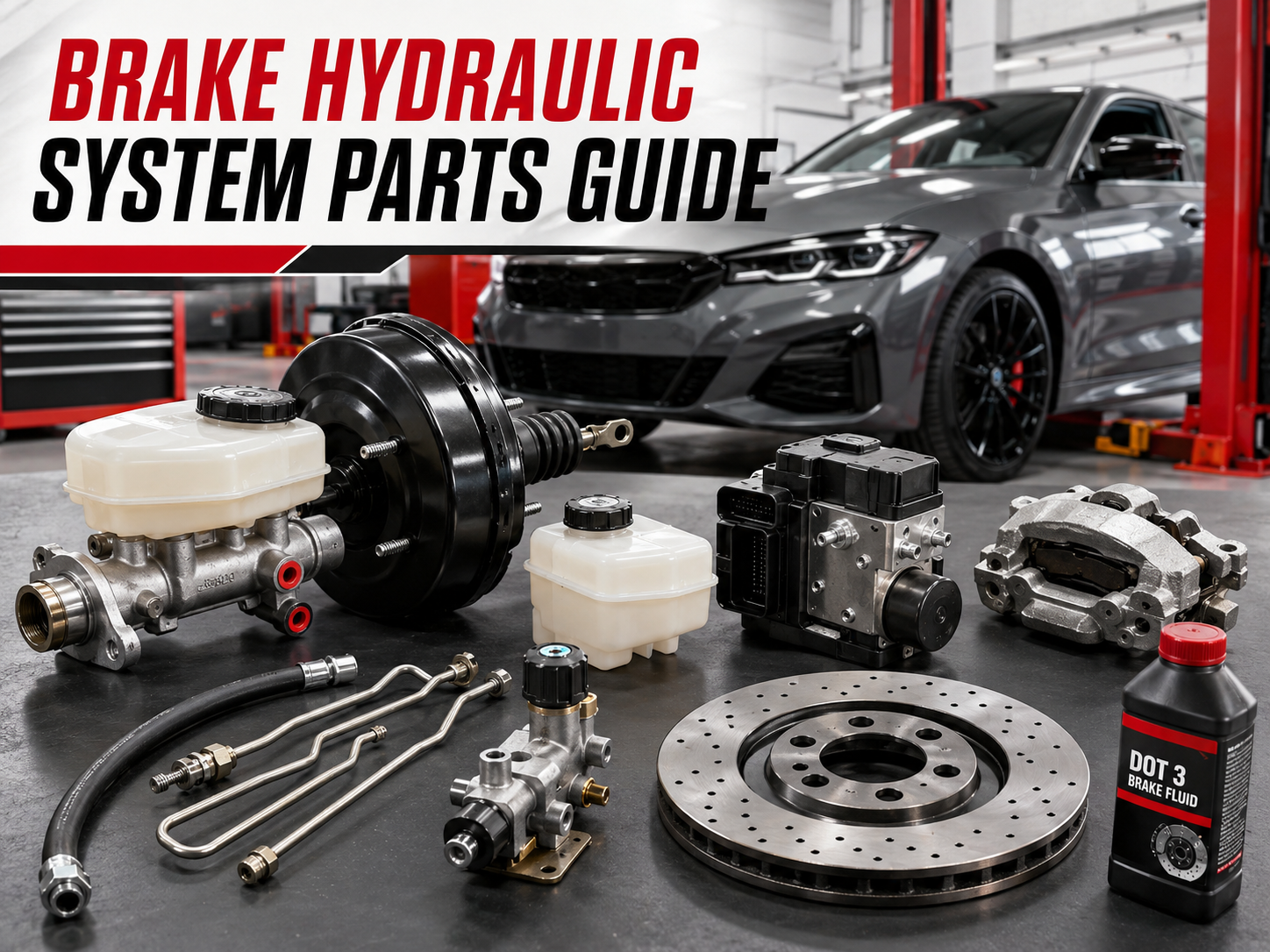
Most hydraulic brake systems use brake fluid to transfer force. When you press the pedal, the master cylinder builds pressure and sends fluid through brake lines toward the wheel-end brake components. If the system is sealed and properly bled, pedal feel should be firm and consistent.
Brake lines carry pressurized fluid. Metal lines face salt, moisture, debris, and age. Flexible hoses move with suspension and steering components. Either type can leak, crack, kink, rust, or weaken over time.
The master cylinder is the main pressure-building component. If internal seals wear, fluid may bypass inside the unit instead of moving properly through the lines. That can cause a sinking pedal or inconsistent brake response. On tow vehicles, trailer brake parts add another layer of safety because the trailer needs controlled braking support under load.
Step-by-Step: How to Plan a Smarter Brake Hydraulic Repair
1. Start With the Symptoms
Write down what the vehicle is doing. A soft pedal, brake warning light, fluid loss, pulling under braking, or weak trailer braking can all point to different issues. Do not assume pads are the only problem when pedal feel changes.
2. Inspect for Leaks and Corrosion
Look around the master cylinder, brake line routing, fittings, hoses, wheel areas, and trailer brake components where applicable. Wet spots, rust flakes, cracked hoses, damaged fittings, or low brake fluid should be taken seriously. If a brake line is leaking, the vehicle should not be driven until repaired.
3. Check Brake Fluid Condition
Old or contaminated brake fluid can contribute to corrosion and poor system performance. If fluid looks dark or contaminated, plan service around the whole system instead of replacing one part and ignoring the cause.
4. Match Parts by Vehicle Fitment
Brake hydraulic parts vary by year, make, model, trim, engine, drivetrain, brake package, and towing setup. Use your VIN when possible and compare product notes before ordering, especially for master cylinders, ABS-related parts, and trailer brake components.
5. Bleed the System Correctly
Any hydraulic repair may introduce air. A master cylinder may require bench bleeding, and the full brake system may need a proper bleeding sequence. Trapped air can leave the pedal spongy.
6. Test Carefully Before Normal Driving
After repair, confirm pedal feel, fluid level, and leak-free operation. For towing, test trailer brake response in a controlled area before loading the trailer.
Recommended OEM Parts for Brake Hydraulic Maintenance
Plaza Parts helps shoppers find factory-grade OEM parts for Acura, Chrysler, Dodge, Honda, Hyundai, Jeep, Ram, Scion, and Toyota models. For brake hydraulic repairs, common parts include OEM brake lines, master cylinder parts, brake hoses, fittings, reservoirs, caps, sensors, trailer brake switches, and related hardware.
Start with brake lines if you see corrosion, leaks, cracked routing, or damaged fittings. If the pedal sinks, pressure feels inconsistent, or the system cannot hold pressure, review master cylinders and parts for your specific vehicle.
For trucks, SUVs, and tow vehicles, inspect trailer brake parts before towing season, long trips, or heavy loads. Matching trailer brake parts to the vehicle, trailer setup, and load use helps support safer control.
Internal Links to Helpful Plaza Parts Categories
Key Takeaways
- Brake hydraulic problems affect pedal feel, stopping distance, and towing safety.
- Brake lines, master cylinders, fluid condition, and trailer brake parts should be inspected as one connected system.
- OEM brake hydraulic parts help support factory-style fitment and reduce installation guesswork.
- Using Plaza Parts can help DIY shoppers save compared to typical dealership counter pricing.
- Always confirm fitment with vehicle details, product notes, and VIN when possible.
Frequently Asked Questions
Can bad brake lines cause a soft brake pedal?
Yes. A leaking, rusted, kinked, or weakened brake line can reduce hydraulic pressure and contribute to a soft or spongy pedal.
How do I know if my master cylinder is failing?
Common signs include a sinking pedal, inconsistent pedal height, fluid loss, or poor pressure buildup. A full brake inspection should confirm the cause before parts are replaced.
Should I replace brake lines and the master cylinder at the same time?
Not always, but one failure can point to a larger system issue. If the vehicle has corrosion, old fluid, or several aging components, a broader hydraulic refresh may save repeat labor.
How often should trailer brakes be inspected?
Inspect trailer brakes before towing season, before long trips, and before carrying heavy loads. Storage conditions, use, trailer weight, and mileage all affect service needs.
Why choose OEM brake hydraulic parts?
OEM parts are designed for the original braking system, which helps with fitment, pressure transfer, pedal feel, and long-term reliability. Plaza Parts gives DIYers a value-driven way to order those parts online while saving vs dealership pricing.